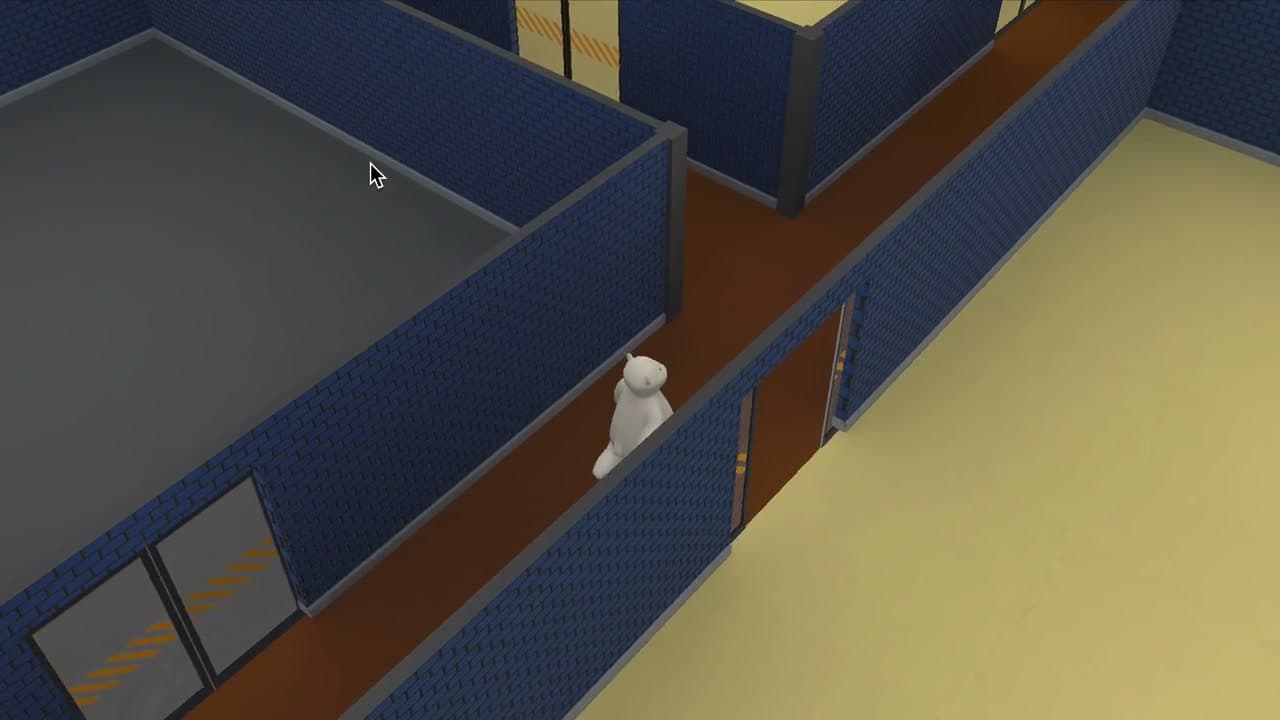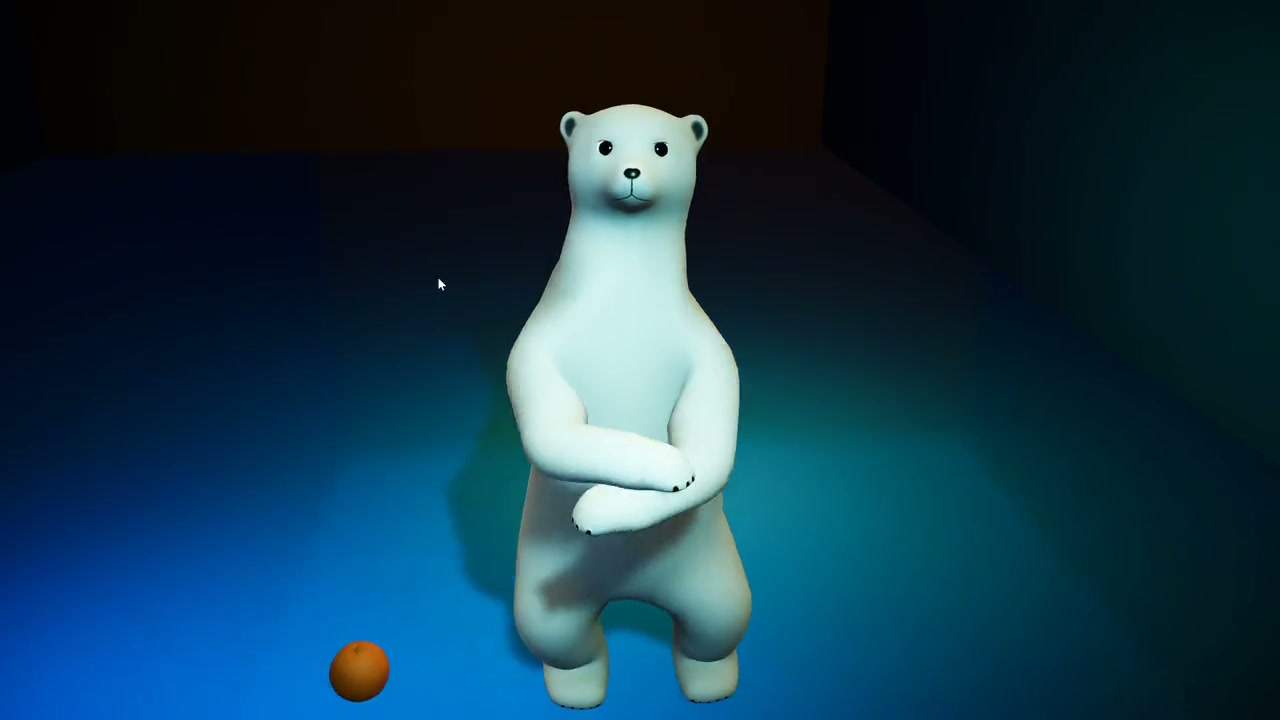
I like making small movements respond to what's happening around a character. A gaze can follow an object, an arm can reach for a target, and a body can leave its limbs a little behind as it moves.
These are earlier Unity experiments, collected in a video I posted in January 2026. The bear and robot studies connect to the later experiments around Oso Sigiloso.
Gaze, flexible arms, and inertia in Unity49 seconds · Spanish audio · English captions available
Gaze and targets
The bear varies its gaze and can track the objects it looks at. That gives it something to respond to, even while the rest of the body stays relatively still.
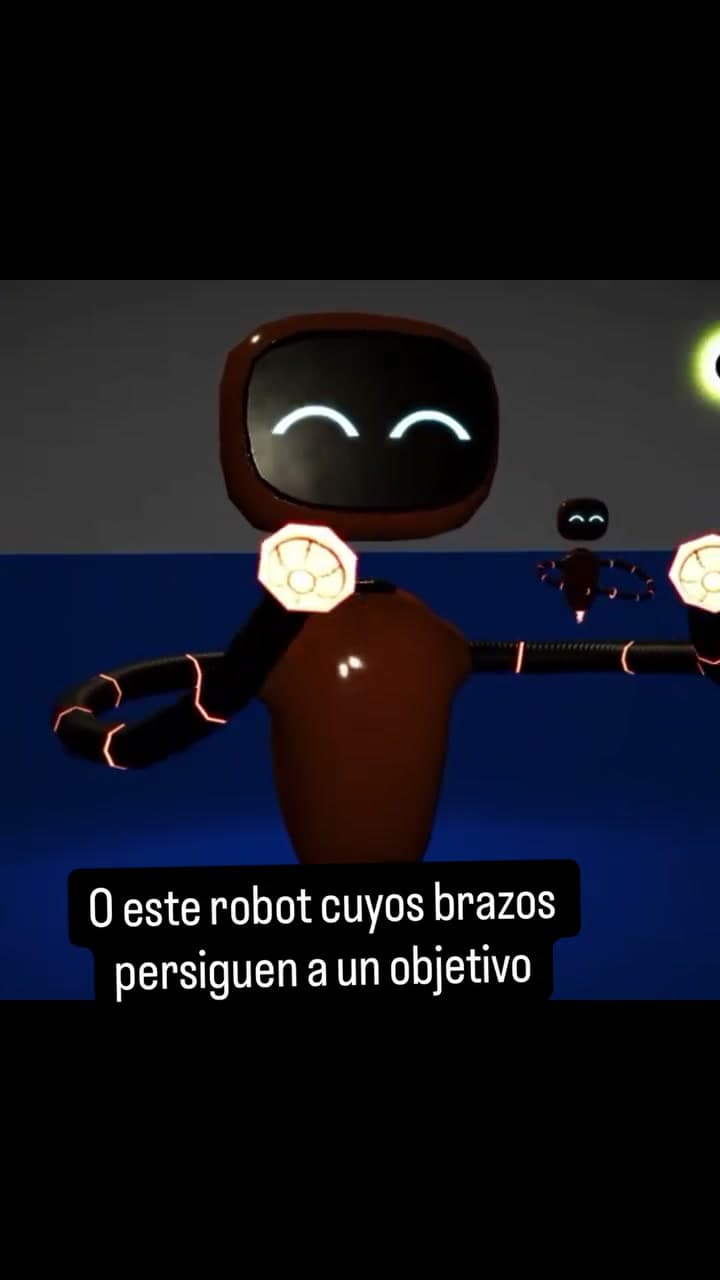
The flexible robot arms follow a target using inverse kinematics. The target gives the arm somewhere to go; the animation has to find a pose that reaches toward it.
Robot arms following a moving target16 seconds · original recording · no audio
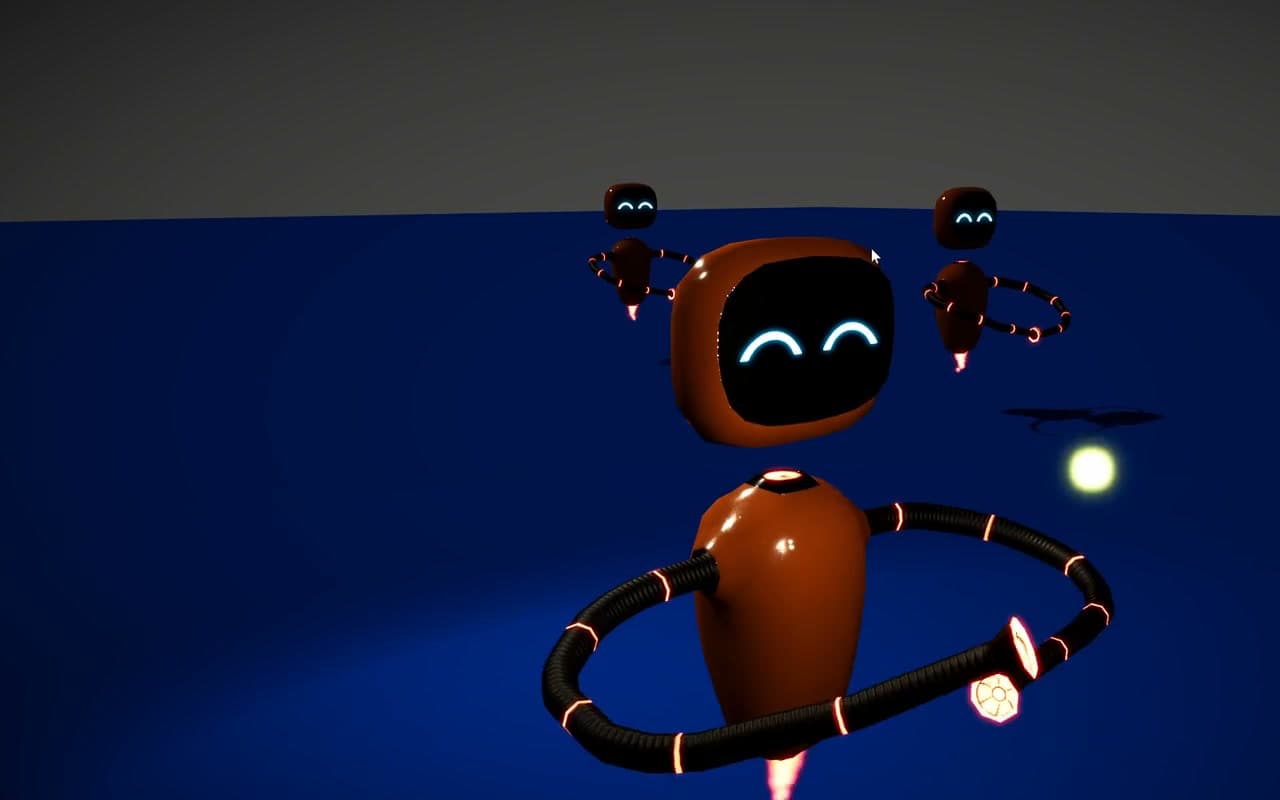
Another view of the arm experiment
Inertia and environments
Another robot's arms react with inertia when its body moves. The limbs lag behind the body, giving the movement some weight. The environments also have their own animated elements.
I like how these small procedural movements fit into the world. They give characters and environments a sense of life through how they respond.
For a different kind of motion from local rules, see my boids and reaction-diffusion experiments.
An earlier character study
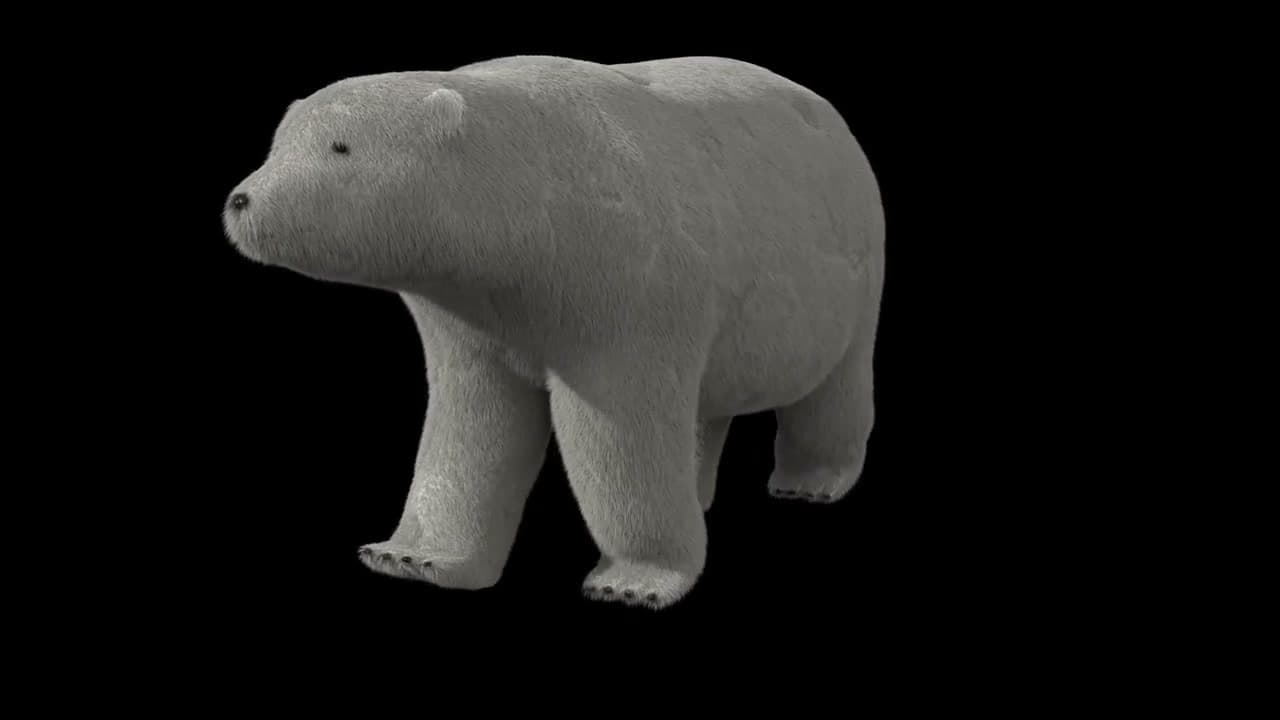
This separate quadruped bear is a short fur and rigging study. I shared it in September 2022 while looking back at earlier work. The clip has no audio.
An earlier bear fur and rigging study12 seconds · original landscape recording · no audio
Read the video transcript
Revisiting my old animations. In general, I prefer making animations procedurally rather than pre-recording them. Like this little bear that varies its gaze. It can even track the objects it looks at. Or this robot whose arms follow a target. Because of its flexible arms, I implemented inverse kinematics using gradient descent (or a Jacobian). Or this robot whose arms react with inertia to its body's movement. Even environments can have animation. Procedural animations, even simple ones, feel authentic, like part of the world. They create a sense of life and add a systemic touch to characters and environments.