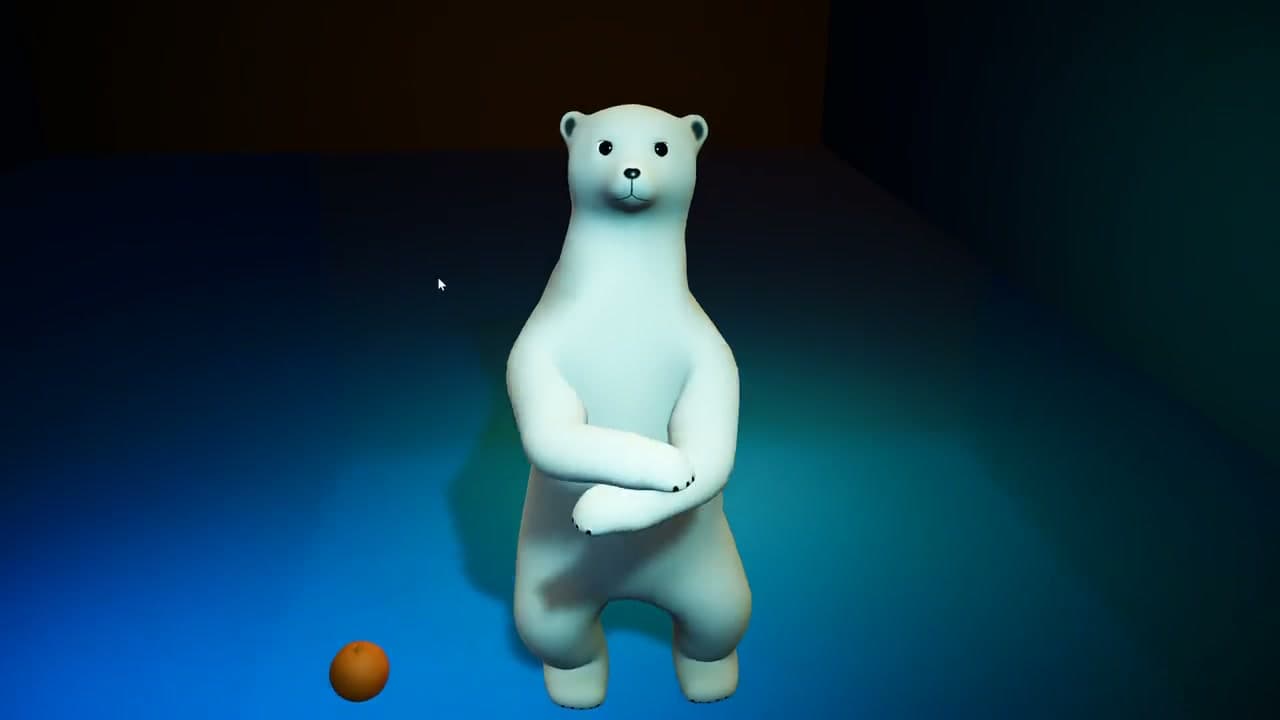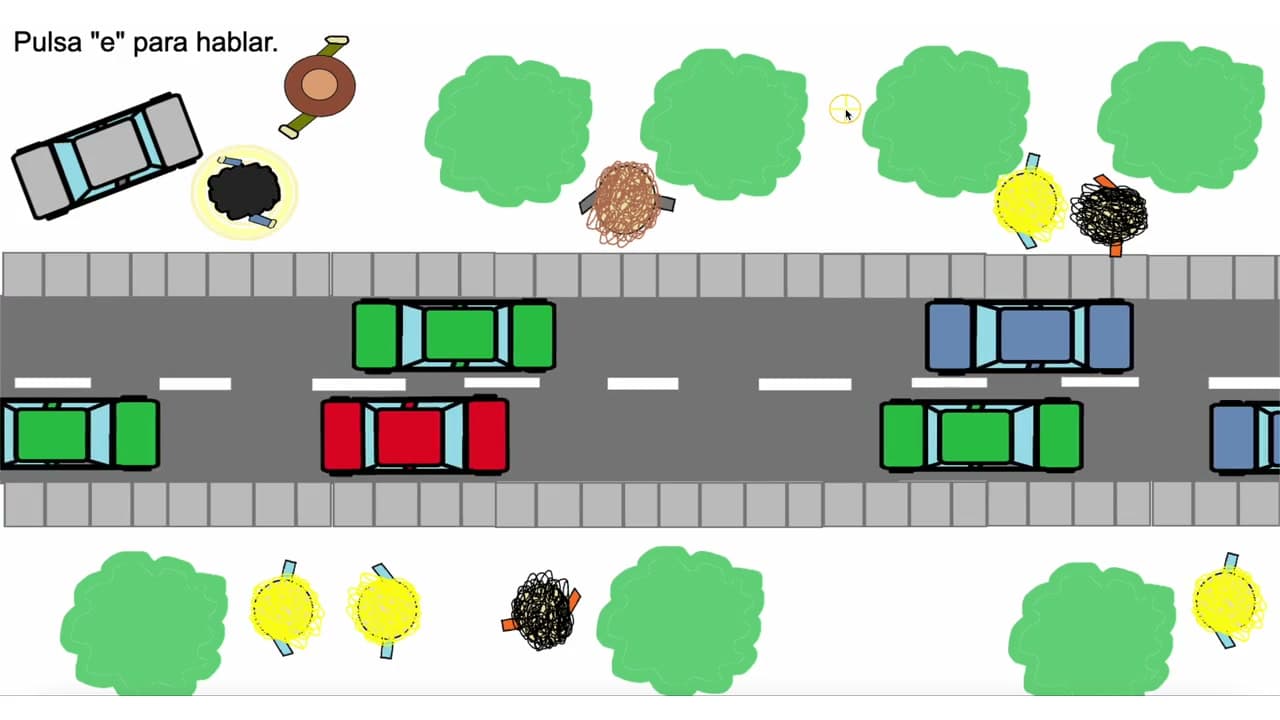
Oso Sigiloso was my undergraduate research project at Universidad del Bío-Bío. I wrote a guide to building a 3D game from scratch and made a playable prototype to try the process myself.
I've always liked bears, so the protagonist was an easy choice: a bear trying to escape a laboratory full of robot guards and surveillance cameras.
Oso SigilosoPlay for free on itch.io
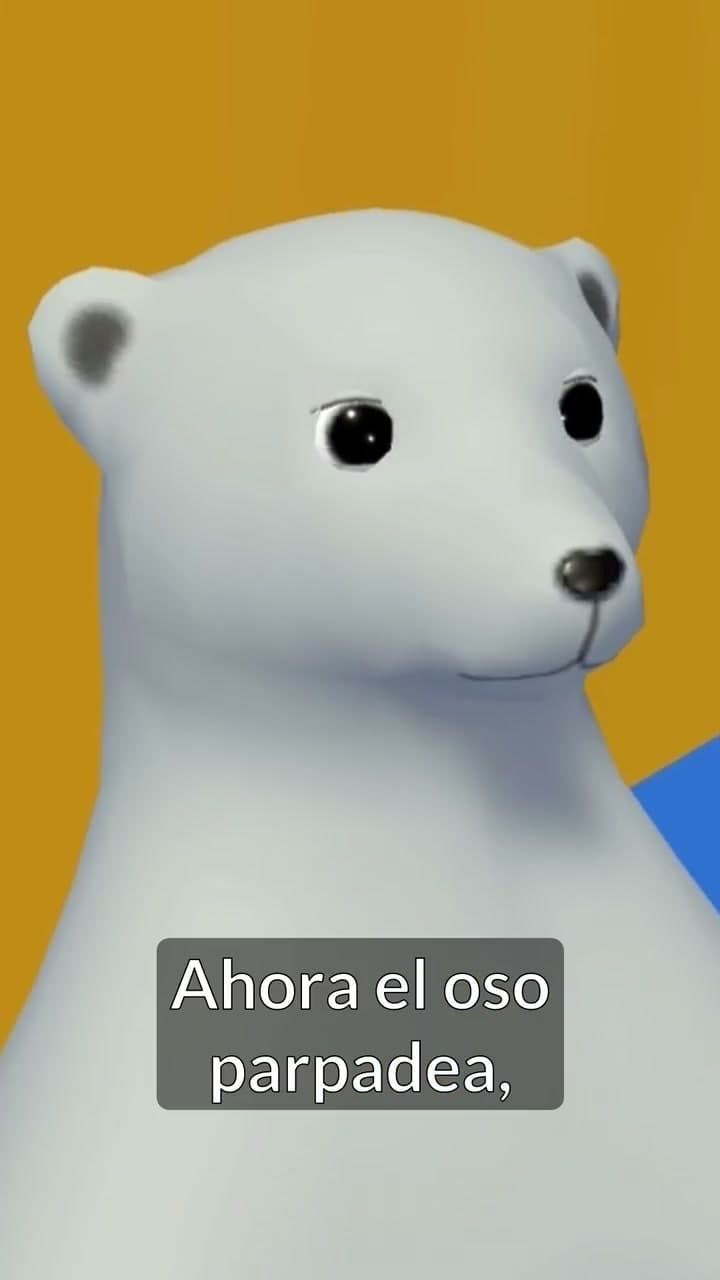
In December 2023 I shared a retrospective of the original prototype and later unfinished experiments: a redesigned bear, procedural animation, robot inverse kinematics, and an augmented-reality test. The Play Store reference in the video is part of that history.
Revisiting Oso Sigiloso60 seconds · Spanish audio · English captions available
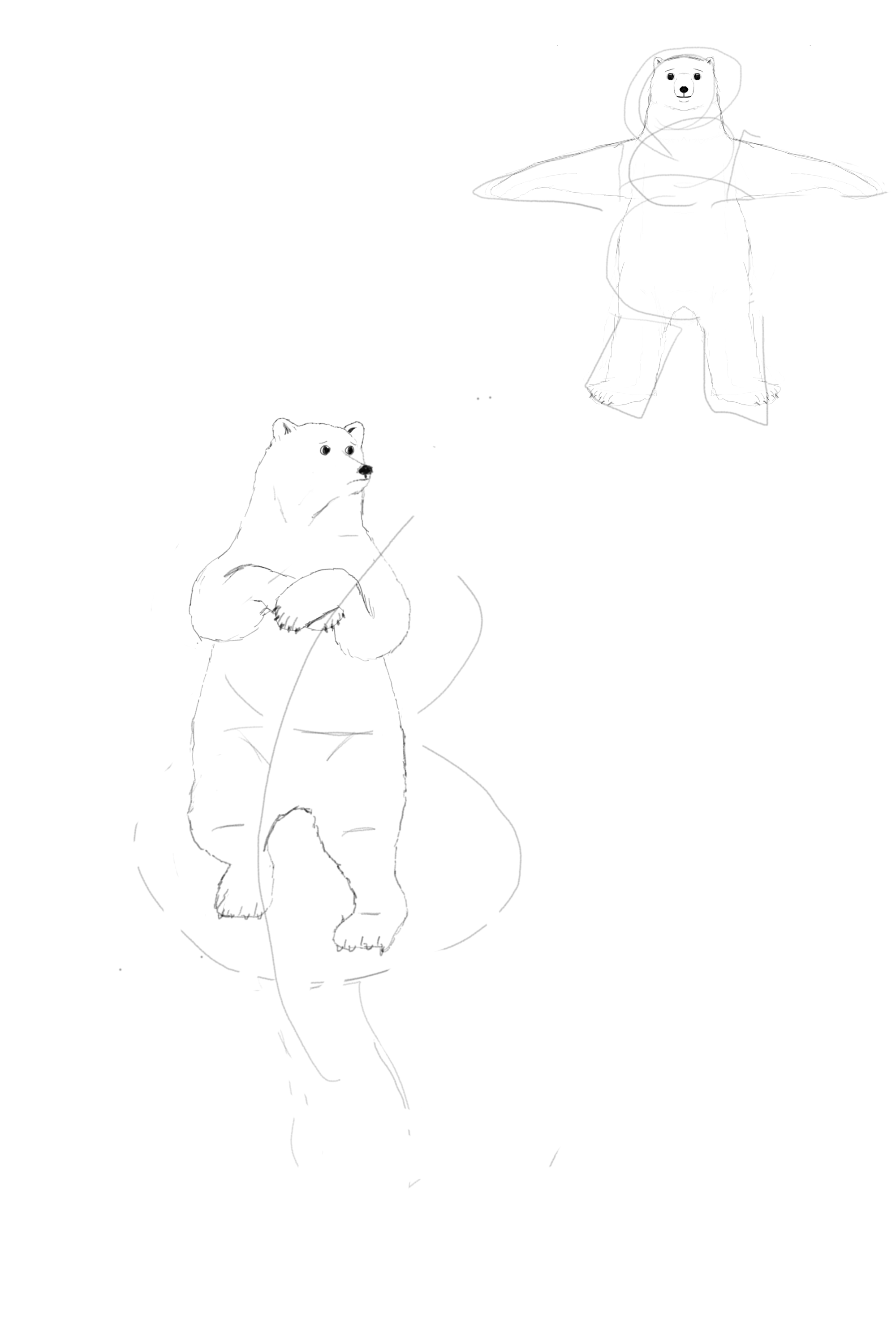
Character sketches from the source material
The guide and the game
The research covered concept, pre-production, 3D art, audio, programming, AI, and distribution. I read papers, engine documentation, books, and GDC talks, then used the game to check how those steps fit together.
The original design paired the bear with a telepathic fruit. The fruit would guide him, and he would carry it. I simplified the prototype to just the bear; the fruit stayed in the design document.
The research and writing took weeks. Building the game took a weekend. It was a small prototype; a larger game would need more time.
Making the bear
I drew an orthographic concept using bear photographs as reference, then modeled the character in Modo Indie. The model ended up at 5,048 polygons, with quad topology for animation.
I painted the textures in Substance Painter and used Akeytsu for the skeleton, IK targets, skin weights, and a seven-keyframe walk cycle. Seeing the character walk was my favorite part of the process.
Guards, cameras, and sound
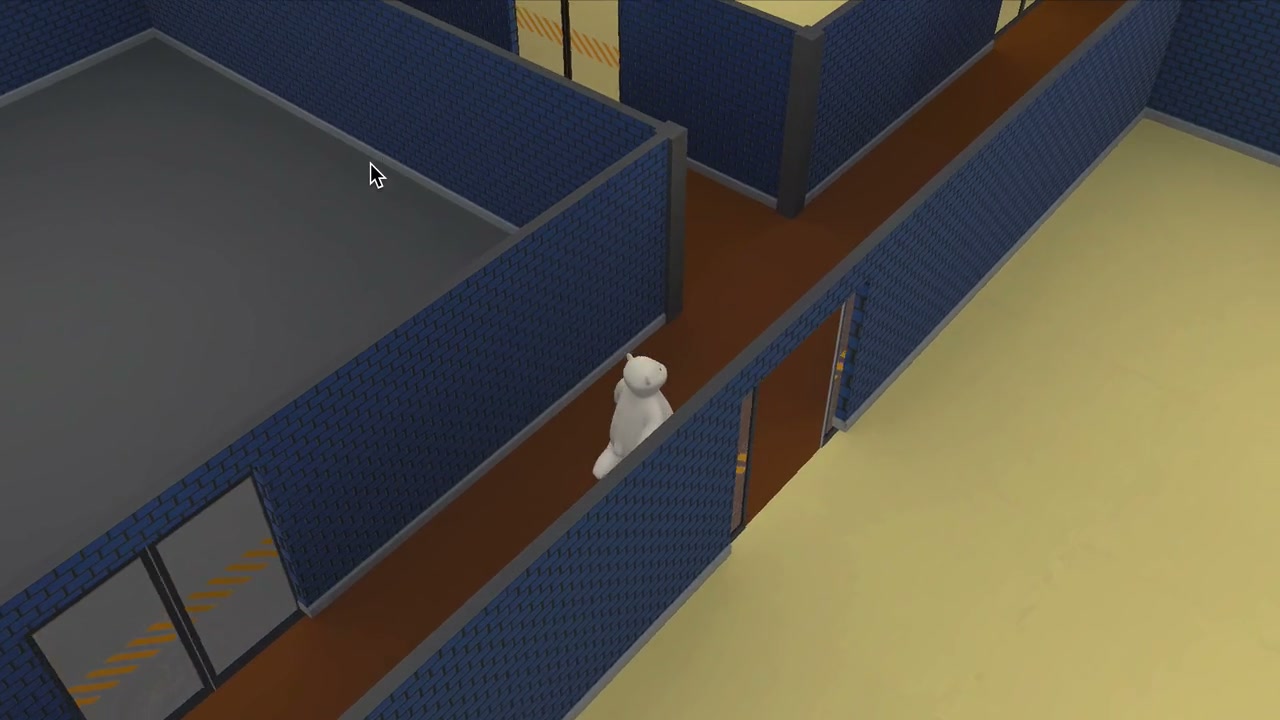
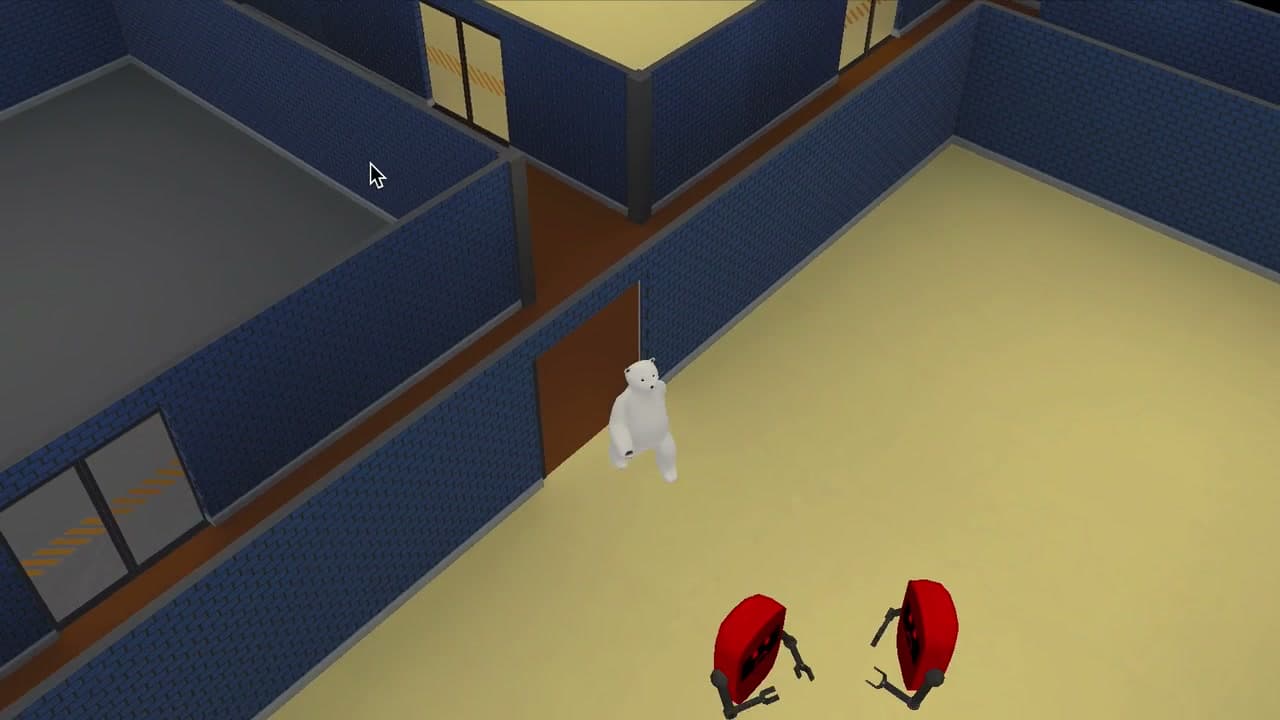
The game uses Unity and C#. Guards move between patrol, search, and chase states. Raycasts and a 70° vision cone determine whether they can see the player; getting caught resets the level.
Cameras use trigger colliders and broadcast a C# event to the guards. Their shader changes from green to yellow to red to show the alert state.
This footage shows the original prototype: the bear moves through the maze, and guards and alert lighting respond to him.
Original prototype gameplay9 seconds · original gameplay recording · no audio
I composed the music in GarageBand and recorded Foley effects with a Zoom H4n Pro. I made the model, animation, music, and sound as part of trying each step in the guide.
The source code is on GitHub. This is the original thesis game. Oso Desktop, my desktop companion app, is a separate project.
The later gaze and robot-arm studies have their own procedural-animation write-up.
What stayed unfinished
The follow-up grew into a redesigned bear, procedural animation, robot inverse kinematics, and an augmented-reality test. I ran out of time and put it aside again. When I returned, some of the software I had used was no longer available or required a subscription.
The playable thesis prototype and the later animation studies are different stages of the project. I keep their histories separate here, with the original game and source code still available.
Read the retrospective transcript
From an abandoned idea to an epic game. This is the story of Oso Sigiloso, a prototype I made in 2020 using Unity available for Android on the Play Store. This game has a very common theme: a bear befriends a piece of fruit and is chased by evil robots. The pinnacle of psychological horror. But it was far from perfect, it didn't have much to offer apart from intense horror. How could I make it more interesting? That's where we get Oso Sigiloso 2.0: Revenge. After lots of research, concept art and attempts at modeling, I improved the bear, the robots, and even the fruit! I introduced procedural animation. Now the bear blinks, looks at the camera and even dances. I put it in augmented reality. No idea why. The robots now use inverse kinematics and much more. Everything was going smoothly until, because I lacked the time, I abandoned it again. When I tried to return to the project, I found that much of the software I had been using was no longer available or still existed, but with a subscription. But this isn't the end of the bear. If you're interested in game development, I've made my code available on GitHub. And soon I'll talk about my new creation. My magnum opus in the horror genre: La Osa Sigilosa 3.0: The Return.